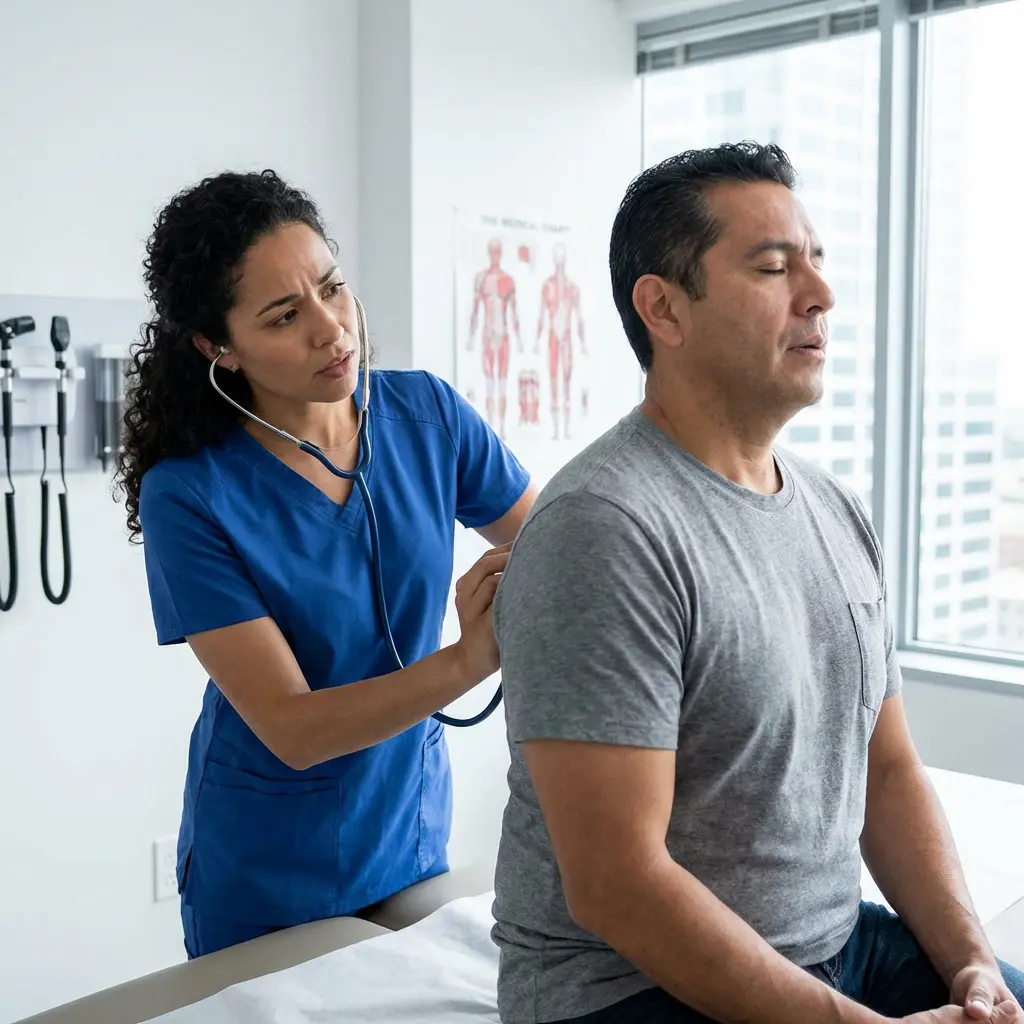
Every fall, the same thing happens in plenty of Spring Branch households: someone wakes up with a fever, body aches and a cough, and the first instinct is to reach for an antibiotic. Sometimes it's a leftover bottle from the kitchen drawer; sometimes a relative mails it from Mexico or a neighbor sells a few pills. The intention is good, because nobody wants to lose a week in bed, but with influenza that shortcut almost never works. Below we explain why, when an antibiotic does have a role, and what to do instead.
The short answer: the flu is caused by a virus
Influenza, like the common cold and COVID-19, is a viral infection. Antibiotics were built to fight bacteria: they break down the bacterial wall or block how bacteria multiply. A virus has none of those parts, so the antibiotic goes through your body without touching it. The Centers for Disease Control and Prevention (CDC) puts it plainly: antibiotics do not work on the viruses behind the flu, colds, most sore throats and most cases of bronchitis.
So why do so many people swear the pill fixed them? Because the flu usually improves on its own within several days. If you start an antibiotic on day three and feel better on day five, it's easy to give it the credit, even though you would have recovered anyway.
When an antibiotic may actually be needed
The flu sometimes opens the door to a bacterial infection on top of it. That changes the picture, and the medical team makes the call after examining you, not before. This table covers the most common cases:
| Situation | Antibiotic? |
|---|---|
| Uncomplicated flu (fever, cough, body aches) | No. Treated with rest, fluids and symptom relief |
| Cold with thick or colored mucus | Usually not; mucus color alone doesn't prove bacteria |
| Sore throat with a positive strep test | Yes, as directed by the medical team |
| Confirmed or highly likely bacterial pneumonia | Yes, based on the evaluation |
| Ear or sinus infection that isn't improving or gets worse | It depends; the medical team decides after an exam |
The simplest example is the throat. If the pain is severe, with fever and no cough, a rapid strep test gives an answer in minutes. Positive means bacteria and an antibiotic makes sense; negative points to a virus.
What it costs you to take antibiotics you don't need
Taking an antibiotic "just in case" isn't harmless. There are two costs: one for you, one for everybody.
For you, right away:
- Diarrhea, nausea, stomach pain or yeast infections.
- Allergic reactions, from a skin rash to severe reactions that need emergency care.
- A gut infection called C. diff, which can show up when the antibiotic wipes out the helpful bacteria in your intestines.
For you and your family, down the road: every time an antibiotic is used, the bacteria that survive learn to resist it. That resistance doesn't stay with one person; it spreads at home, at work and at school. The day you truly need an antibiotic for pneumonia or a urinary tract infection, the usual one may no longer work as well.
Leftover pills and antibiotics bought without a prescription
Three habits worth leaving behind:
- Saving the antibiotic you didn't finish. If there's some left, the last course wasn't completed. Each infection also calls for a specific drug and a specific amount; that old bottle may be the wrong antibiotic, or expired.
- Taking someone else's. What was prescribed for your brother or your neighbor fit their infection, their weight and their allergies, not yours.
- Buying one without a prescription, here or abroad. Without an exam, nobody confirms there's a bacterial infection or checks whether the drug clashes with what you already take for diabetes or blood pressure.
If you have old antibiotics at home, don't pour them down the sink; ask how to dispose of them safely.
So what does help with the flu?
Most healthy people recover at home with simple steps:
- Rest and plenty of fluids: water, broth, oral rehydration drinks.
- Over-the-counter medicine for fever and aches, following the label.
- Staying home until you've gone a full day without fever without using fever reducers, so you don't pass it on.
For influenza there are antiviral medicines, which are a different thing from antibiotics. They work best when started within the first two days of symptoms and are mainly meant for people at higher risk of complications, such as older adults, pregnant women and people living with diabetes, asthma or heart disease. If that's you, don't wait to see if it passes. We run rapid flu and COVID tests as part of our respiratory illness care, and with the result the medical team decides whether an antiviral makes sense for you.
The best way to skip the whole question is prevention: the flu shot is given once a year, ideally early in the season.
Signs the flu has turned into something more
The CDC flags one pattern as a warning: you start to feel better, then the fever and cough come back worse. That can point to a bacterial infection on top of the flu, such as pneumonia, and it does need a prompt visit. Come back in as well if:
- Your fever hasn't broken after several days or runs very high.
- Your cough gets worse instead of easing up.
- You get winded doing simple things, like climbing a few stairs.
- You have diabetes or another chronic condition and your numbers go off track while you're sick.
Call 911 or go to the ER for serious trouble breathing, chest pain or pressure, bluish lips or face, confusion, dizziness that won't go away, or if the person is hard to wake up.
Questions to ask at your visit
If you come in hoping for an antibiotic, say so; that's what we're here for. These questions help you leave with a clear plan:
- Is this viral or bacterial, and how do we know?
- Would a rapid test help before we decide?
- If I don't need an antibiotic, what can I take to feel better, and how long should I stay home?
- If I do need one, how do I take it, and why should I finish it even once I feel fine?
- Which signs should bring me back?
When the medical team starts a treatment, the medications ordered during your visit are handed to you at the clinic before you leave, along with instructions on how to take them.
Find us on Gessner Rd
Clínica Hispana Nueva Salud Gessner is open Monday through Sunday, 9 AM to 9 PM, with no appointment and no insurance required. If a fever hits on a Sunday afternoon, you can still come in for a flu and COVID test before we close. We're at 1914 Gessner Rd Ste B (77080), a short drive from Hedwig Village, Spring Shadows and Long Point. See how we handle flu and coughs on our respiratory illness page.
This article offers general guidance and does not replace an in-person evaluation by our medical team.