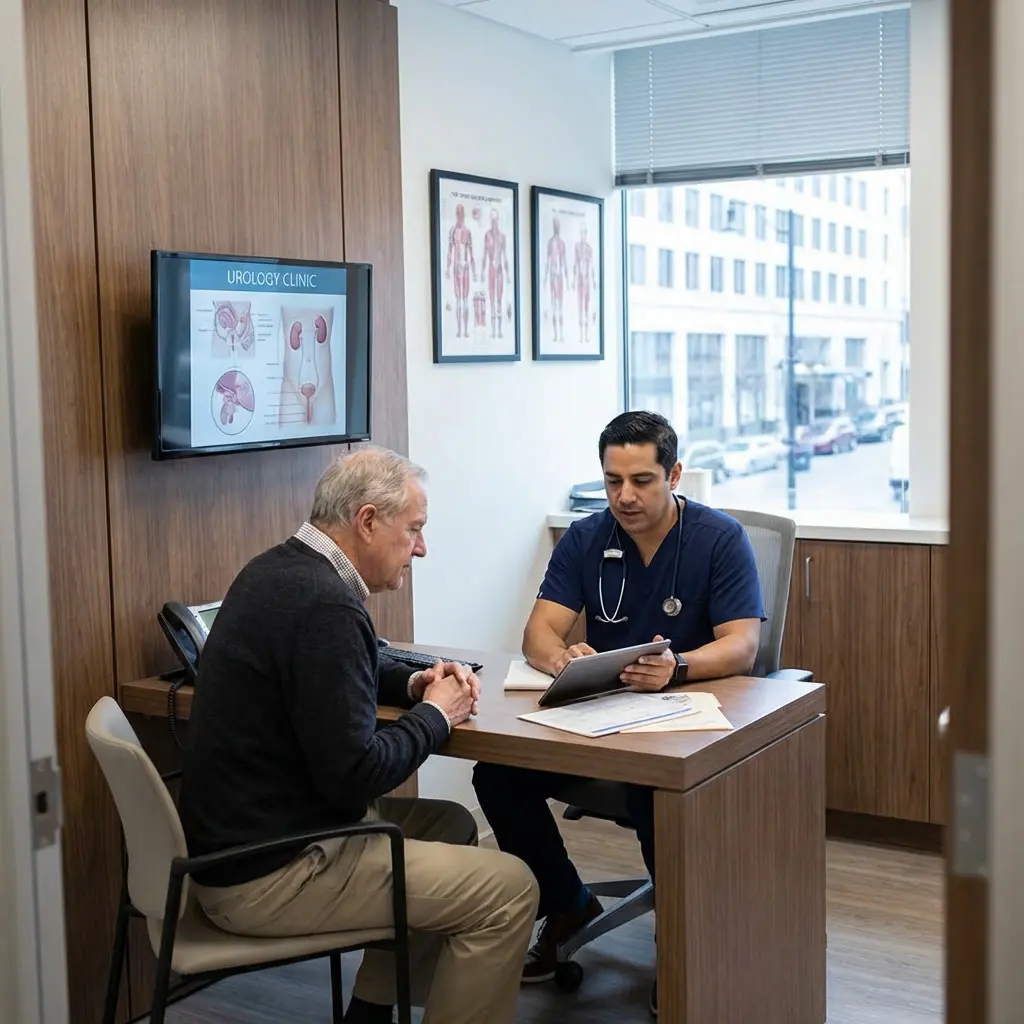
Plenty of men in Houston put off a checkup until the pain keeps them from working. The trouble is that high blood pressure, diabetes, high cholesterol and several prostate problems can build for years without any discomfort. That's exactly what a preventive checkup is for: catching what you can't feel yet, while it's still easier to manage. Here's what to check, when to bring up each test, and what a visit to our Spring Branch clinic looks like.
Why get checked if I feel fine?
Feeling fine doesn't mean everything is in order. High blood pressure rarely hurts, and blood sugar can sit a little high for years before thirst or fatigue show up. The Centers for Disease Control and Prevention (CDC) stresses that many chronic diseases can be prevented or delayed when they're found early and a few habits change.
A yearly checkup also leaves you with something useful: your own numbers, saved year after year. With that baseline, a small shift in glucose, cholesterol or kidney function stands out early, long before symptoms do.
What does a preventive exam for men include?
Not everyone needs the same tests, but a typical men's health visit usually brings together:
- Blood pressure and weight, measured during the visit.
- Blood work with glucose or A1C, cholesterol, triglycerides and, depending on your case, liver and kidney function.
- A urinalysis, which helps flag infections, sugar in the urine or early signs of kidney trouble.
- A prostate conversation: urinary symptoms and whether a PSA test makes sense for you.
- Questions about your energy, sleep and sex life, since constant tiredness or low desire sometimes has a measurable cause, such as testosterone.
If a bundle sounds good, ask about the Complete Exam for Men promotion, which combines a urinalysis, prostate screening and a testosterone test with the consultation included; please confirm it by phone before you come.
At what age should I talk about prostate screening?
PSA is a blood test that can point to changes in the prostate, but it isn't perfect: it sometimes comes back high without cancer and leads to more testing. That's why the U.S. Preventive Services Task Force (USPSTF) recommends that men aged 55 to 69 decide about screening after weighing the benefits and harms with their care team, and it advises against routine screening from age 70 on.
The same recommendation notes that men whose father or brother had prostate cancer, and African American men, face a higher risk. If that applies to you, it's worth starting the conversation earlier. At your visit we go over your family history and decide with you, without pressure, whether to check your PSA now or later.
Which symptoms shouldn't wait?
Some signs call for a visit soon, even if your yearly checkup is months away:
- Burning when you pee, frequent urges or blood in your urine, which can mean a urinary tract infection or an inflamed prostate.
- A weak stream, trouble getting started, or getting up several times a night to urinate.
- Intense thirst, weight loss without dieting, or fatigue that won't lift.
- Frequent headaches with blurry vision.
- Swelling in your ankles or legs.
- A lump or pain in a testicle.
- Erection problems, which are sometimes the first clue to a circulation issue.
If you have severe chest pain, shortness of breath or a cold sweat, call 911.
What if I already have diabetes or high blood pressure?
Then the checkup stops being a once-a-year event and becomes follow-up care. The goal is to keep your numbers in range and make sure your treatment is still working. In our chronic conditions program we review your values, adjust medication when needed and leave you with a clear plan for the months ahead.
Some habits help as much as any pill: walking every day, swapping soda for water, getting good sleep and, if you smoke, asking for support to quit.
What is a visit to the clinic like?
You walk in to 1914 Gessner Rd Ste B in Spring Branch any day between 9 AM and 9 PM, no appointment needed. You don't need health insurance, and we see you in English or Spanish. The medical team first listens to what's on your mind, checks your blood pressure and weight, and decides with you which labs to order. Blood and urine samples are collected during the same visit, and we let you know when your results are in so we can walk you through them calmly.
If you live in Spring Branch, Memorial, Hedwig Village, Spring Shadows, Long Point, Carverdale or Fairbanks, you're just minutes away. Your next checkup could happen this week.
This article is for information only and does not replace a medical visit. For a personal evaluation, stop by or call +1 (346) 226-5820.